
When Darkness Comes
(and there's no escaping it)

"Some gifts can only be found in the dark.” (Esther Joy Goetz)

This past week, my husband sat beside his dying father while I helped care for my grandchildren hundreds of miles away.
It wasn’t where either of us wanted to be.
I wanted to be with him. I wanted to sit beside my father-in-law’s bed, hold his hand, comfort my husband, witness the slow and sacred work of a life coming to its natural conclusion. Instead, life had placed me somewhere else. There were children who needed care, meals that needed making, and a daughter who needed support. So while my husband kept watch beside one generation, I spent my days tending another.
The contrast felt almost impossible at times.
One moment I was helping little ones find their shoes or wiping sticky hands after lunch. The next I was checking my phone for updates from hospice. A text would arrive. He isn’t eating much now. He’s sleeping most of the day. The nurse thinks it may be soon.
Life and death seemed to be unfolding simultaneously, each demanding attention, each asking to be honored.
At first, I experienced the week as a kind of split. Here was life in all its noisy, messy aliveness. There was death quietly approaching. Here was beginning. There was ending.
But the longer I sat with it, the more that division began to dissolve.
Perhaps because death has a way of stripping things down to what is true.
We spend so much of our lives dividing the world into categories. Light and dark. Joy and grief. Birth and death. We imagine ourselves moving away from one and toward the other, as though the goal of a well-lived life is to remain in the light for as long as possible.
Yet nothing in nature seems to work that way.
The flowers blooming in June push their roots deep into dark soil. Seeds split open underground long before they ever reach for the sun. A child spends months growing in the darkness of the womb before taking their first breath. The moon disappears each month into darkness and no one assumes she has failed.
Darkness is not an exception to the rhythm of life.
Darkness is part of the rhythm.
And yet we often speak of it as though it is something to overcome.
We tell people to look on the bright side. We search for silver linings. We celebrate clarity, certainty, and answers. Even our spiritual language tends to favor illumination. We seek enlightenment. We pray for guidance. We ask to see the way forward.
Rarely do we speak of the wisdom of darkness.
Rarely do we acknowledge that some of the most profound experiences of our lives unfold there.
Love unfolds there.
Grief unfolds there.
Transformation unfolds there.
The soul unfolds there.
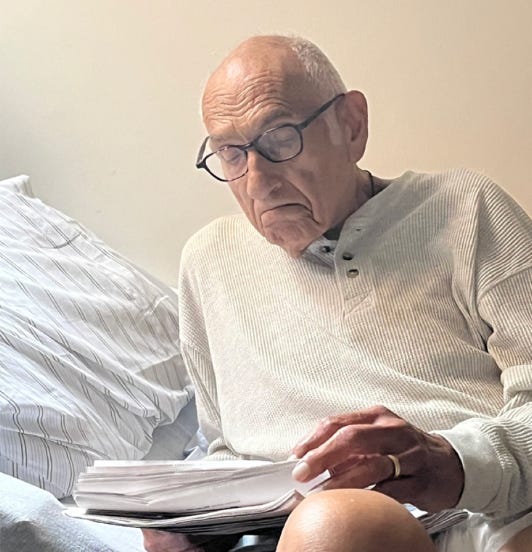
As I thought about my father-in-law’s final days, I found myself returning again and again to the mystery of death itself. Not as a problem to be solved or an enemy to be conquered, but as one of the most natural realities of being human.
I would not have chosen this loss for my husband. I would not have chosen it for our family. Grief is real, and so is the ache that comes when someone we love is no longer here.
But neither can I pretend that death somehow exists outside the circle of life.
Death belongs to life in the same way winter belongs to the year.
Not as a mistake.
Not as a failure.
Not as evidence that something has gone wrong.
But as part of the whole.
I wonder if much of our suffering comes not from darkness itself but from our resistance to it. From the stories we have inherited that tell us darkness is where bad things happen, while light is where the good things live. From the belief that joy is somehow more sacred than sorrow, that birth is more holy than death, that certainty is preferable to mystery.
The older I get, the less convinced I am.
What if darkness is not the opposite of light but its companion?
What if grief is not the opposite of love but one of its expressions?
What if death is not the opposite of life but one of the ways life completes itself?
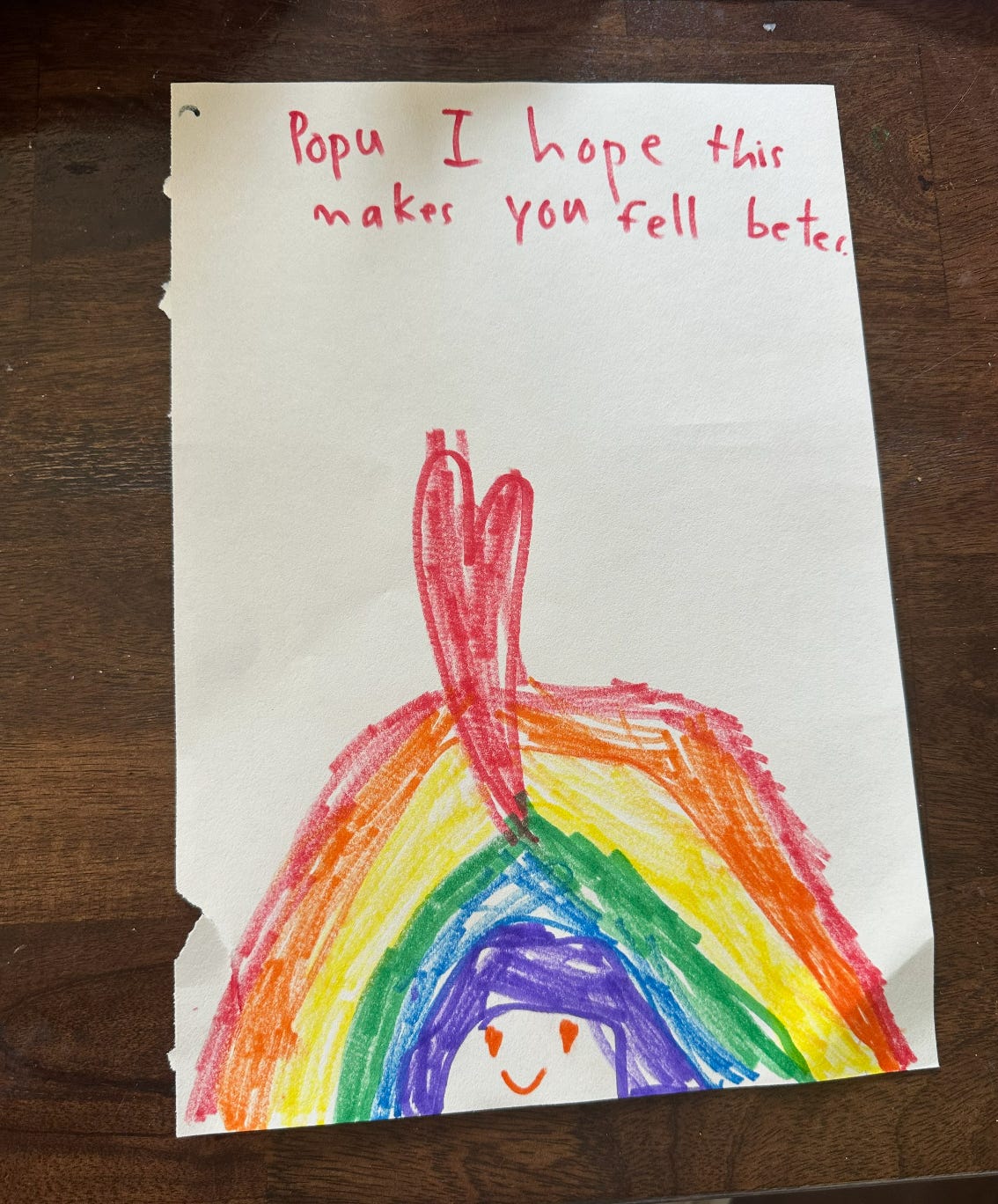
As I moved through the week, holding grandchildren in one place while my husband held vigil in another, I began to see something I had missed before. Life was not happening over here while death happened over there. It was all one story. One family welcoming, nurturing, loving, grieving, and letting go. One continuous circle of belonging.
The children laughing in the backyard and the old man taking his final breaths were not opposites. They were part of the same sacred rhythm that has carried every generation before us and will carry every generation after us.
Perhaps this is what darkness has to teach us.
Not that suffering is good.
Not that loss is easy.
But that wholeness requires more of us than light alone.
Wholeness asks us to make room for everything that belongs to being human: the joy and the grief, the birth and the death, the certainty and the mystery, the bright noon sun and the dark night sky.
When darkness comes—and it always does—it is tempting to treat it as an intruder. To rush through it, explain it away, or search frantically for the nearest source of light.
But perhaps there are moments when darkness is not asking to be escaped.
Perhaps it is asking to be honored.
Perhaps it is asking us to remember that it, too, belongs.
From my sad heart to yours,
Esther
🌀 Spiritual Director and Soul Companion
P.S. In this week’s Deep Dive, I’m sharing the four texts that my children sent to my husband after his dad passed on Thursday night and how/why they held us both the past two days.
If cost is a barrier, simply reply “scholarship.” Truly. No explanations needed.
If this has touched you and you want to invite others into this space, I would feel so honored if you would connect them with me. It’s really how I get my words and my resources available.

